
Understanding whether a project may involve Water Pollution Control Plans or a Stormwater Pollution Prevention Plan (SWPPP) is an important step before construction activities begin. Selecting the appropriate documentation pathway early can help contractors, developers, engineers, and project managers coordinate planning requirements, reduce documentation delays, and align with applicable agency expectations.
A Water Pollution Control Plan (WPCP) and a Stormwater Pollution Prevention Plan (SWPPP) serve different functions within California’s stormwater compliance framework. Which approach commonly applies depends on site characteristics, permit criteria, local standards, contractual expectations, and agency guidance.
Although the California Construction General Permit (CGP) provides an important regulatory framework, determining the appropriate documentation for a particular project typically requires a review of the site’s scope and governing requirements. This article offers a practical guide to understanding the distinctions between WPCPs and SWPPPs to support informed planning and coordination rather than legal or regulatory determinations.
This guide is part of our broader Ultimate California Stormwater Compliance Handbook: SWPPP, Permits, and Risk Management, which explains California construction stormwater planning, permit coverage, monitoring, and risk-management considerations in greater detail.
Here is the Quick Answer:
A California construction project generally needs Construction General Permit coverage when it will disturb one acre or more of land, or when a smaller site is part of a larger common plan of development or sale that collectively disturbs one acre or more.A SWPPP is a required Permit Registration Document for projects seeking CGP coverage. A WPCP is not a statewide permit document; it is generally required when a local agency, project owner, public entity, or contract specification calls for one.A WPCP does not provide statewide CGP authorization, and a SWPPP supports enrollment and ongoing obligations without independently granting coverage.Caltrans specifications, local standards, bid documents, and oversight structures should be reviewed before deciding which materials need to be prepared and coordinated.
The Core Thresholds of California Stormwater Rules
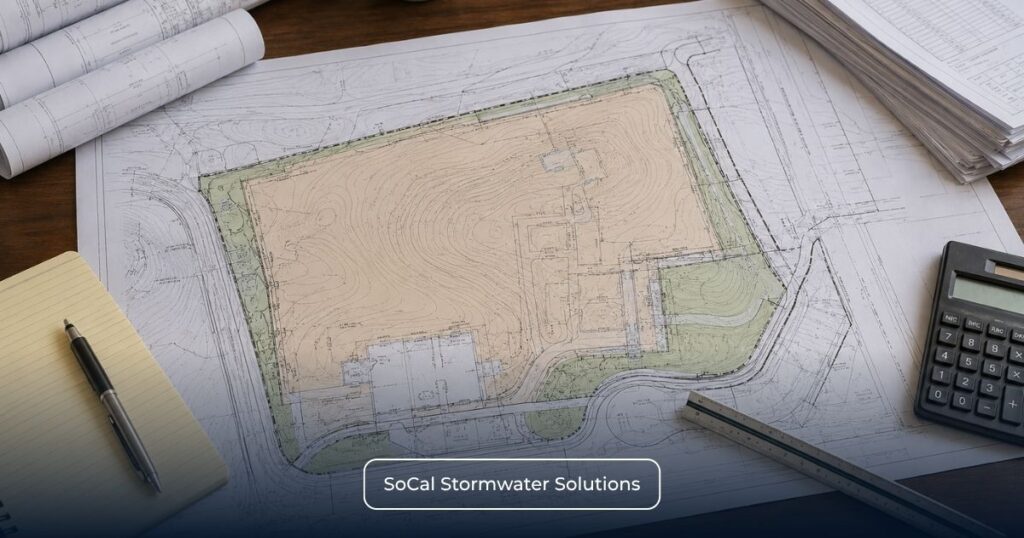
California’s Construction General Permit generally applies when construction activity will disturb one acre or more of land, or when a smaller work area is part of a larger common plan of development or sale that collectively disturbs one acre or more. Projects subject to the permit must obtain CGP coverage before construction begins, unless a specific exception or waiver applies.
A WPCP is different. It is generally a contract-, agency-, or locally required water-pollution-control document rather than a document that provides statewide CGP coverage. The correct path depends first on CGP applicability, then on any Caltrans, municipal, owner, or contract-specific requirements.
For contractors, developers, and engineering teams, establishing the expected scope of soil disturbance helps align stormwater planning with scheduling, procurement, and permitting activities. Early coordination can reduce document revisions and clarify responsibilities before grading or other site work begins.
The California State Water Resources Control Board administers the Construction General Permit (CGP), which provides the primary statewide framework for many construction-related stormwater requirements. Under Order No. 2022-0057-DWQ, the one-acre disturbance benchmark commonly serves as an initial reference point when evaluating permit applicability, but it is not the only factor considered during project review.
In certain situations, smaller work areas may be connected to a larger common plan of development, affecting how total land disturbance is assessed. Broader project context remains important when determining which planning documents should be prepared or coordinated.
Separate from statewide permit considerations, local jurisdictions, public agencies, and contract specifications may establish additional documentation expectations. Those requirements can influence whether a Water Pollution Control Plan or other project-specific materials are needed, even when CGP coverage does not apply.
Confirming these factors during early project planning helps teams identify which document should be prepared, reviewed, or coordinated before work proceeds, reducing administrative uncertainty and supporting more efficient project execution.
Regulatory Framework: WPCP vs. SWPPP Technical Differences
SWPPPs are typically associated with California Construction General Permit obligations and related permit-registration activities, while WPCPs commonly arise from local, agency, owner, or contract requirements. The correct document depends on the nature of the work and governing authorities rather than acreage alone.
| Category | WPCP | SWPPP |
| Primary Driver | Local Ordinance, Public-Agency Requirement, Owner Standard, or Contract Specification | California Construction General Permit Requirements |
| Typical Threshold Context | Often Used for Projects Below the CGP Threshold Where a Local or Agency Requirement Applies | Generally Required for Projects Disturbing One Acre or More, or Smaller Projects Within a Larger Common Plan of Development |
| State Filing | Typically Not Submitted through SMARTS Unless a Separate Requirement Applies | Submitted as Part of Permit Registration Documents Through SMARTS |
| Primary Oversight | Municipality, Public Agency, Owner, or Contract Administrator | State Water Board, Regional Water Boards, and the Responsible Discharger |
| Function | Organises Site-Specific Water-Pollution-Control Measures | Supports Implementation of CGP Requirements and Permit-Coverage Obligations |
The primary difference between these documents is their role within California stormwater planning. A SWPPP is generally prepared to support implementation of the Construction General Permit when CGP obligations may apply. The document contributes to permit-registration activities but does not independently provide permit coverage.
A WPCP commonly functions as a water-pollution-control planning document established through local ordinances, owner expectations, public agency standards, or construction contracts. It helps organize erosion, sediment, and pollutant-control measures consistent with the requirements governing a specific project.
Because multiple authorities can influence documentation needs, selecting between a WPCP and a SWPPP should not rely solely on disturbed acreage. Ownership structure, contract language, agency involvement, and the overall scope of work all contribute to determining which materials should be prepared and coordinated.
Early evaluation of these factors can help support compliance with applicable permit requirements by clarifying responsibilities before field operations begin and reducing the need for later revisions to environmental documentation.
When a Water Pollution Control Plan Is Required
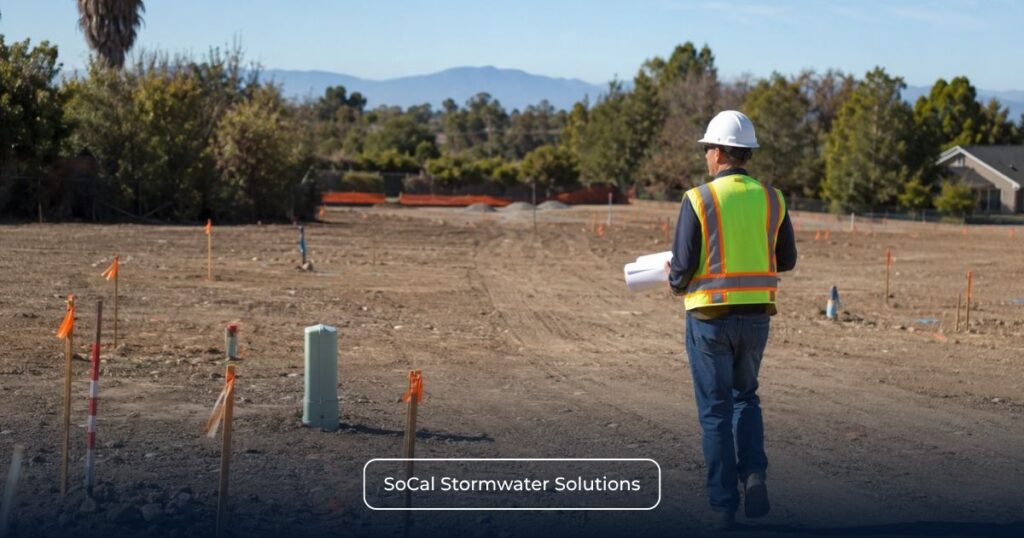
A Water Pollution Control Plan may be required when a project is not covered by the statewide Construction General Permit and a municipality, public agency, owner, or contract specification requires a project-specific water-pollution-control document. A disturbed area below one acre is often part of that analysis, but it does not automatically create a WPCP requirement.
The one-acre threshold is the primary starting point, but it is not the only consideration. Certain eligible projects may qualify for a Small Construction Rainfall Erosivity Waiver, while some sites that do not discharge to waters of the United States may be eligible to pursue a Notice of Non-Applicability supported by the required technical documentation. These pathways are fact-specific and should be reviewed before assuming that standard SWPPP coverage is required.
In practice, determining whether a WPCP should be prepared typically involves several coordinated steps:
- Define the expected ground disturbance.
Estimating grading limits, trenching, staging areas, access routes, and temporary work zones helps teams understand the overall footprint of the work before mobilization begins. - Evaluate applicable contract provisions and oversight structures.
Early coordination with qualified stormwater practitioners can help teams identify local, municipal, owner, or agency expectations before field operations begin. - Confirm that the work falls outside CGP applicability following project-specific evaluation.
Where the CGP does not apply following appropriate evaluation, a WPCP may often serve as the principal water-pollution-control document for the job. A WPCP does not provide coverage under California’s statewide Construction General Permit and does not replace permit obligations where the CGP applies. - Check municipal standards, owner expectations, public-agency criteria, and contract language.
Erosion and sediment control measures are frequently governed by bid documents, owner specifications, permit conditions, or local ordinances that establish separate obligations before field operations begin. - Identify which materials should be prepared before crews mobilize.
Depending on the scope of work and oversight structure, a WPCP or related supporting records may need to be prepared and coordinated in advance to align with contract commitments and agency expectations.
When a WPCP is used as the primary water-pollution-control document, the work must still follow the standards established by the entities overseeing the site. Those expectations differ across municipalities, owners, and public agencies, making early coordination and document verification an important part of successful job-site preparation.
When a Stormwater Pollution Prevention Plan Is Mandated
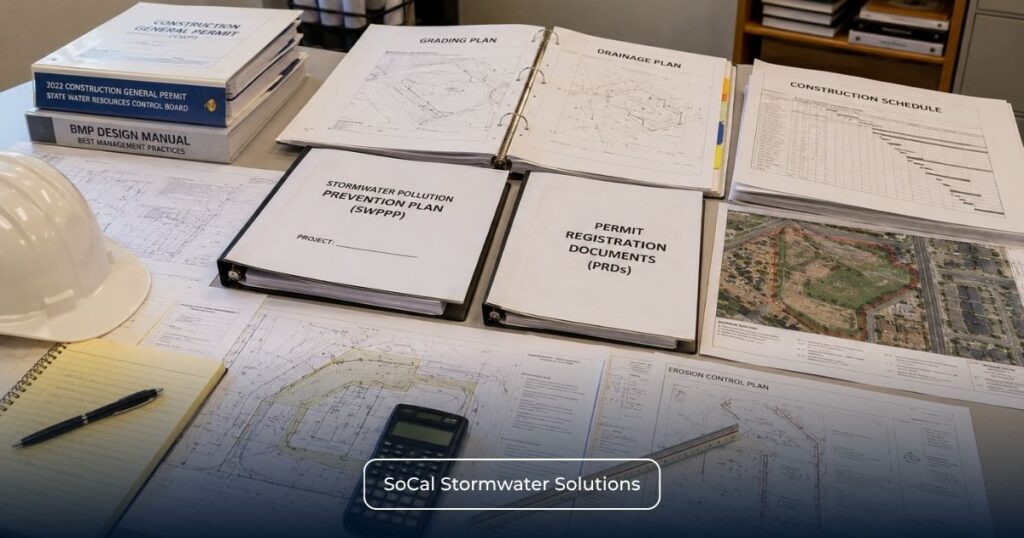
Projects that fall within California’s Construction General Permit framework commonly require a coordinated set of tasks that may include SWPPP preparation, Permit Registration Documents (PRDs), Risk Level evaluation, and electronic submissions. These elements are subject to regulatory criteria and site evaluation, and a SWPPP itself does not independently provide permit coverage.
1. Evaluate Whether CGP Responsibilities Apply
Once CGP applicability has been identified, preconstruction coordination typically focuses on aligning stormwater responsibilities with grading schedules, utility work, contractor sequencing, and related administrative tasks.
2. Establish the Appropriate Risk Level
Risk Levels help organize how stormwater controls, monitoring expectations, and field management practices are applied throughout a job site. The designation is based on criteria within the permit and influences how teams allocate resources, maintain records, and coordinate ongoing oversight.
The determination does not guarantee specific outcomes or create identical responsibilities across every site.
3. Assemble Permit Registration Documents (PRDs)
Permit Registration Documents (PRDs) are the materials used to support enrollment under the Construction General Permit. They commonly include information about the location, responsible parties, and stormwater controls associated with the site.
Preparing these records is one administrative component within a larger compliance structure rather than a standalone obligation.
4. Complete Electronic Submissions
California uses the Stormwater Multiple Application and Report Tracking System (SMARTS) to manage Construction General Permit-related submissions and records. Electronic filing may form part of the enrollment and reporting process, depending on the characteristics of the site and the governing criteria.
A SWPPP supports these responsibilities but does not independently authorize activity under the CGP.
For projects seeking CGP coverage, the required Permit Registration Documents must be submitted and certified through SMARTS. Once the registration process is completed and a Waste Discharge Identification number is issued, the project may proceed in accordance with the applicable permit requirements.
5. Coordinate Ongoing Site Management
SWPPP implementation extends beyond preparing a single document. It typically involves maintaining records, updating control measures as conditions change, and aligning field operations with established permit expectations.
Project teams often use the SWPPP to support preparation for inspections, monitoring, and reporting obligations, helping supervisors, engineers, and contractors maintain a consistent approach to site oversight throughout the duration of the job.
Taken together, these steps illustrate that a SWPPP functions as an ongoing compliance framework that connects administrative submissions, field practices, recordkeeping, and operational decision-making under the Construction General Permit.
Caltrans Specific Stormwater Compliance Rules
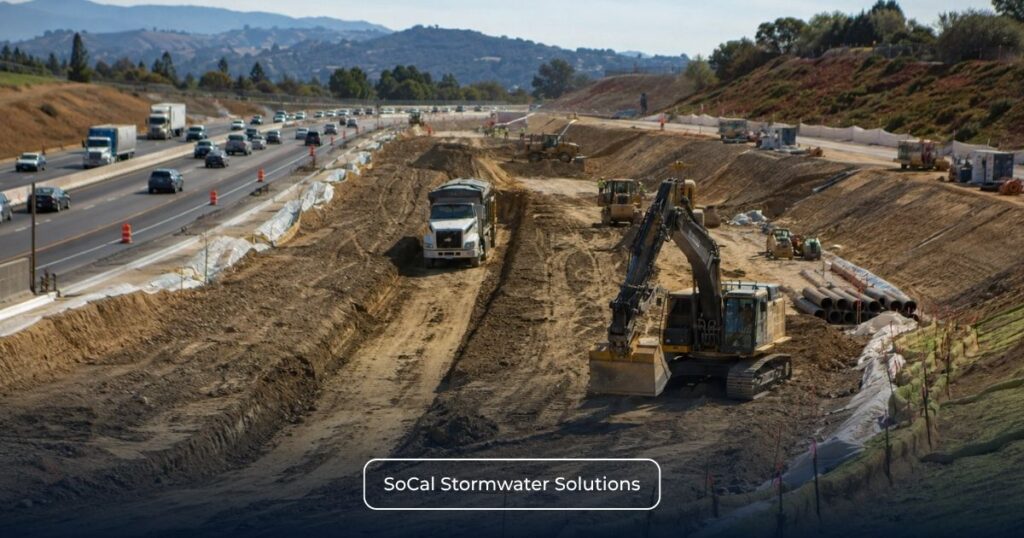
Caltrans commonly uses Disturbed Soil Area (DSA) thresholds when determining whether a WPCP or SWPPP approach applies within right-of-way work. These practices are tied to Caltrans specifications, templates, and contract documents and should not be interpreted as universal standards for every construction site in California.
Disturbed Soil Area (DSA) refers to the total ground surface affected by grading, excavation, trenching, access roads, staging areas, stockpiles, and other construction operations identified within a Caltrans scope of work. DSA measurements help determine which stormwater-control documents and supporting materials are typically coordinated under the agency’s operational standards.
For Caltrans construction projects, a WPCP is generally required where the project disturbs less than one acre of Disturbed Soil Area. For projects disturbing one acre or more, Caltrans requires a SWPPP under the applicable contract specifications, and that SWPPP satisfies the project’s WPCP requirement. Contractors should still review the project’s special provisions, bid documents, and current Caltrans manuals because project-specific requirements may add further documentation, inspection, training, or BMP obligations.
These distinctions are applied through agency guidance, contract specifications, and established quality-control procedures. The forms, review processes, and supporting records used by Caltrans are tailored to its own oversight structure and may differ from those used by municipalities, utility owners, or private developments.
Contractors working within the state highway system should review bid packages, special provisions, and applicable Caltrans stormwater guidance, rather than relying solely on generalized California stormwater guidance. The controlling documents for a particular assignment may establish additional expectations regarding water-pollution controls, record management, and field coordination.
Caltrans practices illustrate how stormwater planning tools are applied within a specific right-of-way environment, but they do not replace separate obligations that may arise from other governing entities or contractual arrangements.
Technical Boundaries and Professional Qualifications
Qualified SWPPP Developers (QSDs) and Qualified SWPPP Practitioners (QSPs) perform different functions within California construction stormwater programs. QSDs are generally associated with SWPPP preparation and revision, while QSPs support field coordination, inspections, monitoring efforts, and ongoing site oversight. Neither role transfers legal responsibility from the discharger.
Qualified SWPPP Developers (QSDs)
QSDs commonly support the development and maintenance of Stormwater Pollution Prevention Plans under established standards.
Typical duties may include:
- Preparing SWPPPs for eligible construction sites.
- Revising SWPPPs when site conditions, sequencing, or stormwater controls change.
- Evaluating erosion and sediment-management strategies.
- Developing supporting materials associated with SWPPP updates and ongoing maintenance activities.
- Coordinating technical information used throughout the duration of construction operations.
Their role centers on creating and updating the written materials that guide stormwater-control measures and related administrative functions.
Qualified SWPPP Practitioners (QSPs)
QSPs commonly focus on field execution and ongoing oversight tasks once stormwater controls are in place.
Typical duties may include:
- Supporting field implementation and operational coordination.
- Conducting required inspections.
- Reviewing inspection records, sampling activities, monitoring efforts, and BMP implementation completed by trained personnel.
- Identifying conditions that may require corrective measures or plan updates.
- Assisting with recordkeeping and associated administrative work.
A QSP is not automatically a QSD. Individuals may perform both functions only when they possess the appropriate qualifications for each role.
Neither QSDs nor QSPs provide legal advice, grant regulatory approvals, or guarantee specific outcomes. Responsibility for meeting applicable permit obligations remains with the discharger, even when qualified professionals assist with technical and operational tasks.
Need help determining which stormwater plan may apply?
Not sure whether your project needs a WPCP, a SWPPP, CGP registration, or additional agency-specific documentation? As a trusted stormwater compliance partner, SoCal Stormwater Solutions can review your project scope, disturbed-area estimate, contract requirements, and applicable agency criteria to help identify the appropriate documentation pathway before mobilisation.
Our team provides practical inspections, documentation support, and project-specific guidance to help clients manage stormwater requirements with greater confidence.
_____________________________________________________________________
Sources:
- State Water Resources Control Board – Fact Sheet: ORDER WQ 2022-0057-DWQ
- State Water Resources Control Board – NPDES 2022 Construction Stormwater General Permit
- State Water Resources Control Board – 2022 CGP Qualifying Precipitation Event Guidance
- State Water Resources Control Board – 2022 Construction Stormwater General Permit – Frequently Asked Questions
- State Water Resources Control Board – Attachment D: Risk Level Requirements
- State Water Resources Control Board – Attachment A – Acronyms and Terms
- United States Environmental Protection Agency – Stormwater Discharges from Construction Activities
- United States Environmental Protection Agency – Stormwater Planning
- State Water Resources Control Board – Storm Water Program
- Southern California Coastal Water Research Project – STORMWATER MONITORING COALITION LABORATORY GUIDANCE DOCUMENT