A Qualified Industrial Stormwater Practitioner (QISP) provides specialized technical support under California’s Industrial General Permit and is required for specified permit activities, including Level 1 and Level 2 Exceedance Response Actions. QISP assistance is also required for certain new dischargers determining coverage eligibility when industrial stormwater discharges reach an impaired water body.
For plant managers and EHS teams, unexpected stormwater monitoring results can create uncertainty around Numeric Action Level (NAL) evaluations, SMARTS reporting workflows, and required documentation responsibilities. Understanding how sampling data, permit-defined status determinations, and Exceedance Response Action (ERA) requirements connect helps facilities organize the appropriate response process.
This blog explains how QISP support fits within California’s Industrial General Permit framework, including monitoring workflows, ERA timelines, SMARTS reporting requirements, and facility evaluations. SoCal Stormwater Solutions can assist with required documentation and reporting, provide site-specific guidance based on facility conditions and applicable requirements, and support facility teams in evaluating stormwater-management needs.

TL;DR
- A Qualified Industrial Stormwater Practitioner (QISP) provides technical support for applicable Industrial General Permit activities, including ERA evaluations, documentation preparation, BMP evaluations, and reporting activities where required by the permit, while facility responsibilities and LRP/DAR certification duties remain separate.
- A Numeric Action Level (NAL) exceedance is a monitoring benchmark trigger requiring evaluation when applicable criteria are met. An exceedance alone is not automatically a permit violation; ERA requirements depend on permit-defined criteria and status determinations.
- The SMARTS database supports electronic reporting and status tracking for Industrial General Permit information. Monitoring data is evaluated according to permit requirements, with July 1 beginning the reporting year and applicable status information based on submitted data and permit-defined criteria.
- Level 1 ERA requirements include completing the Level 1 ERA Evaluation by October 1 and certifying and submitting the Level 1 ERA Report through SMARTS by January 1, with required QISP assistance and separate LRP/DAR certification responsibilities.
- Level 2 ERA requirements apply when applicable permit criteria are met and may involve additional technical evaluation, a Level 2 ERA Action Plan, and a Level 2 ERA Technical Report addressing pollutant sources, BMP evaluations, and corrective planning.
The Regulatory Framework of the California Industrial General Permit
The California Industrial General Permit establishes monitoring, reporting, and Exceedance Response Action requirements for covered industrial facilities. QISP assistance becomes mandatory when a facility enters Level 1 or Level 2 status and is also required for certain new dischargers evaluating coverage eligibility for discharges to an impaired water body.
Unexpected stormwater monitoring results can create operational uncertainty for plant managers, EHS teams, and facility decision makers. Understanding how Numeric Action Level results, permit-defined criteria, documentation responsibilities, and the SMARTS database reporting workflows connect is an important part of managing Industrial General Permit obligations.
A Numeric Action Level exceedance is not itself a permit violation. Applicable response actions depend on monitoring results, evaluation criteria, and the requirements established under the Industrial General Permit. The State Water Resources Control Board provides the regulatory framework through the California Industrial Stormwater Program, while Qualified Industrial Stormwater Practitioner (QISP) support may assist with technical evaluations and documentation needs where applicable.
For broader guidance on California stormwater permits, SWPPP requirements, monitoring obligations, and risk-management considerations, review The Ultimate California Stormwater Compliance Handbook: SWPPP, Permits, and Risk Management.
SoCal Stormwater Solutions can assist with required documentation and reporting, help support compliance with applicable permit requirements, and provide site-specific guidance based on facility conditions and applicable requirements.
Core Operational Functions of a Qualified Industrial Stormwater Practitioner
Facility personnel and Qualified Industrial Stormwater Practitioner (QISP)-supported activities serve different roles within the Industrial General Permit framework. Facility teams remain responsible for daily operations, site observations, operational controls, and maintaining facility information.
Where applicable, QISP involvement provides technical support for permit-required evaluations, Numeric Action Level (NAL)-related assessments, Best Management Practices (BMP) evaluations, ERA documentation, and technical information preparation associated with Industrial General Permit reporting requirements.
Information about QISP training pathways and related Industrial General Permit training resources is available through the California Stormwater Quality Association QISP Resources.
Facility Personnel Responsibilities vs. Qualified Industrial Stormwater Practitioner (QISP) Responsibilities |
||
|---|---|---|
| Functional Area | Facility Personnel Responsibility | QISP Role |
| SWPPP Implementation | Carry Out Daily Operational Controls, Maintain Facility Information, and Implement Assigned Stormwater Procedures | Review SWPPP Implementation, Evaluate Whether Revisions Are Needed, and Provide Technical Input on Permit-Required Updates |
| Stormwater Monitoring and Sampling | Coordinate Site Access, Support Sampling Activities, Maintain Field Records, and Provide Operational Context | Review Sampling Results, Evaluate Potential Pollutant Sources, and Support Technical Interpretation of Monitoring Data |
| BMP Evaluation | Maintain Existing Controls, Report Site Conditions, and Identify Operational Changes That May Affect Stormwater Management | Evaluate BMP Effectiveness, Assess Pollutant Pathways, and Recommend Site-Specific Corrective Measures Where Required |
| Annual Comprehensive Facility Compliance Evaluation | Provide Access to Facility Areas, Records, Staff, and Operational Information | Perform or Support the Annual Comprehensive Facility Compliance Evaluation and Document Findings |
| Annual Reporting | Supply Monitoring Data, Inspection Records, Training Logs, and Operational Information | Assist with Technical Annual Report Content and Supporting Documentation; LRP or DAR Certification Responsibilities Remain Separate |
| Level 1 ERA Evaluation and Report | Provide Site Records, Operational History, Access, and Relevant Facility Information | Complete the Required Level 1 ERA Evaluation and Prepare the Level 1 ERA Report |
| Level 2 ERA Action Plan and Technical Report | Provide Facility Data, Operational Context, and Access for Technical Review | Prepare the Level 2 ERA Action Plan and Technical Report, Evaluate Pollutant Sources, and Develop Applicable Corrective Strategies |
| Employee Training | Ensure Relevant Employees Attend Training and Follow Facility Procedures | Train or Support Training for Appropriate Pollution Prevention Team Members and Connect Training Content to Facility-Specific Stormwater Responsibilities |
| SMARTS Technical Documentation | Provide Accurate Facility Information and Maintain Required Records | Prepare or Review Technical Information for SMARTS Submissions While LRP or DAR Certification Responsibilities Remain Separate |
| Corrective Action Support | Implement Approved Operational Changes and Maintain Completed Corrective Measures | Evaluate Contributing Conditions, Support SWPPP and BMP Updates, and Document Technical Findings for Applicable Permit Workflows |
When a sample result is elevated, the QISP typically works backward from the affected discharge location. The review may include:
- Confirming the sample location, drainage area, laboratory result, and field documentation.
- Mapping activities and exposed materials that drain to that discharge point.
- Inspecting material storage, loading areas, secondary containment, paved and unpaved surfaces, inlet protection, and housekeeping conditions.
- Reviewing recent operational changes, spills, maintenance work, employee training records, and implemented BMPs.
- Identifying likely pollutant sources and determining whether the SWPPP or BMP program requires revision.
- Preparing the technical findings and BMP changes for the applicable ERA report and SMARTS submission workflow.
A Qualified Storm Event (QSE) is a precipitation event that produces a stormwater discharge and is preceded by at least 48 hours without a discharge from any drainage area. The Industrial General Permit generally requires sampling during four Qualified Storm Events per reporting year at each applicable discharge location, subject to sampling reductions, exceptions, and other permit-specific provisions. Coordinating facility access, sample collection, chain-of-custody documentation, laboratory delivery, and field records is therefore an important operational responsibility.
SoCal Stormwater Solutions can support this process through Industrial Inspection and Monitoring Services, assisting with sampling coordination, documentation support, and site-specific guidance based on facility conditions and applicable requirements.
QISP-supported activities are designed to complement facility responsibilities by providing technical input where applicable Industrial General Permit requirements call for additional evaluation, documentation, or reporting support. These activities may help identify and address stormwater-management needs while helping facilities prepare for inspections, monitoring, and reporting obligations.
The Exceedance Response Action Timeline and SMARTS Milestones
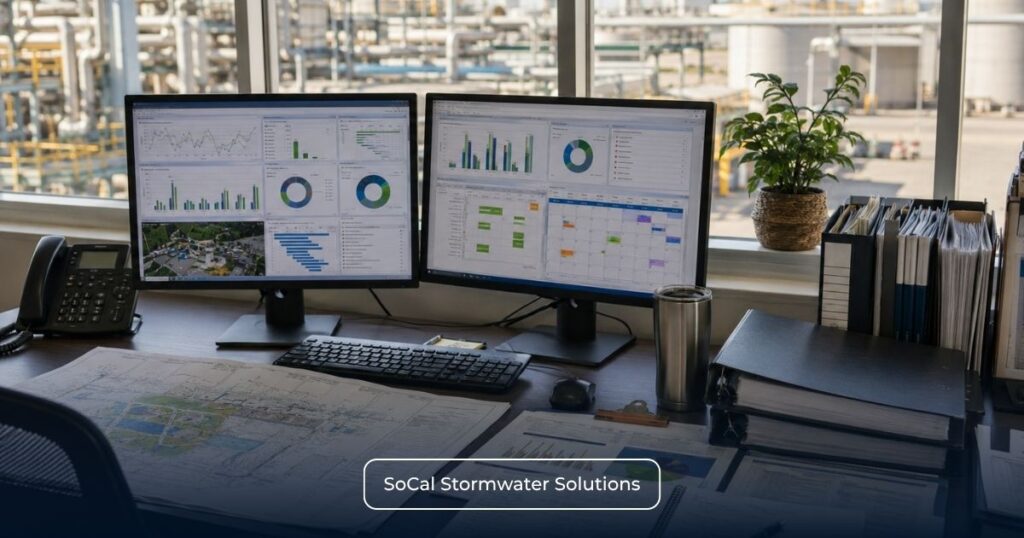
The Industrial General Permit reporting year runs from July 1 through June 30. After the reporting year closes, monitoring results are evaluated under the permit’s Annual Average and Instantaneous Maximum criteria. SMARTS assigns the facility’s regulatory Level status on July 1 based on submitted data, but the facility remains responsible for independently reviewing results and tracking required ERA actions.
The SMARTS database supports electronic reporting, certification, and tracking of required Industrial General Permit information through the State Water Board SMARTS Portal, while facility responsibilities remain with the appropriate parties.
1. Reporting-Year Status Determination — July 1
SMARTS assigns the facility’s regulatory Level status on July 1 based on submitted monitoring data from the prior reporting year. The facility remains responsible for independently reviewing results, tracking applicable ERA triggers, and meeting required deadlines.
2. Level 1 ERA Evaluation — October 1 Deadline
When Level 1 ERA requirements apply, the facility must complete the required Level 1 ERA Evaluation by October 1 following the applicable Level 1 status assignment under the Industrial General Permit. The evaluation process considers factors such as potential pollutant sources, site conditions, existing Best Management Practices (BMPs), and possible corrective measures.
The discharger must obtain the assistance of a Qualified Industrial Stormwater Practitioner (QISP) to complete the Level 1 ERA Evaluation and prepare the Level 1 ERA Report. Facility personnel continue to provide operational information, site access, and relevant facility records needed for the evaluation process.
3. Level 1 ERA Report Certification and SMARTS Submission — January 1 Deadline
The Level 1 ERA Report must be certified and submitted through SMARTS by January 1 following the applicable Level 1 ERA Evaluation deadline, consistent with Industrial General Permit timelines. Facilities can review additional details regarding electronic ERA submissions through the SMARTS Industrial Guidance Resources provided by the State Water Resources Control Board.
The process involves electronic reporting and certification responsibilities associated with the submitted information.
QISP involvement relates to technical evaluation and documentation support where applicable, while certification responsibilities remain with the appropriate responsible parties, such as the Legally Responsible Person (LRP) or Duly Authorized Representative (DAR), according to permit requirements.
ERA Level 1 Evaluation Data Requirements
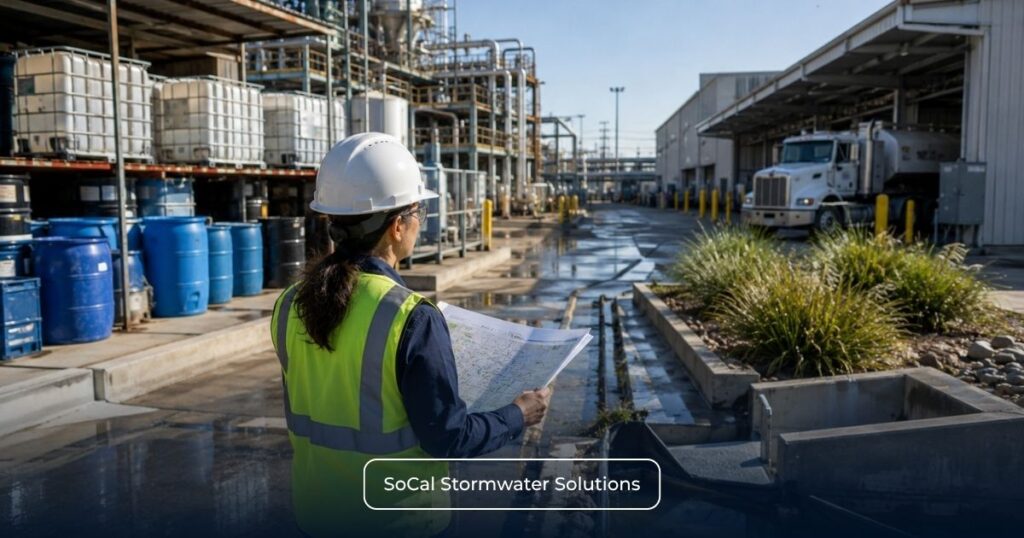
The Level 1 ERA Evaluation process may involve reviewing identified pollutant sources, pollutant source tracking considerations, existing BMP effectiveness, and applicable structural and operational controls, site condition observations, and corrective-action considerations. These evaluation components depend on applicable permit requirements and facility conditions rather than representing an identical checklist for every facility.
A structured review of facility conditions can help teams organize information needed for ERA-related activities. Routine inspections, sampling coordination during applicable Qualified Storm Events, and monitoring activities can help facilities identify and document stormwater-management needs before reporting deadlines. Through Industrial Inspection and Monitoring Services, SoCal Stormwater Solutions can assist with sampling coordination, documentation support, and site-specific guidance based on facility conditions and applicable requirements.
How a Qualified Industrial Stormwater Practitioner Supports Level 2 ERA Requirements
Level 2 status generally applies when a facility in Level 1 records another qualifying exceedance for the same parameter during a subsequent reporting year. The facility must obtain QISP assistance to prepare a Level 2 ERA Action Plan and a subsequent Level 2 ERA Technical Report.
The Level 2 ERA Action Plan must be submitted through SMARTS by January 1 of the reporting year following the Level 2 status determination. The Technical Report is then due by January 1 following submission of the Action Plan. The QISP evaluates pollutant sources, drainage areas, existing BMPs, and the appropriate permit demonstration or corrective approach. The LRP or DAR reviews, certifies, and submits the documents through SMARTS.
Level 1 ERA vs. Level 2 ERA: Key Operational Differences |
||
|---|---|---|
| Workflow Element | Level 1 ERA | Level 2 ERA |
| Status Trigger | Applicable NAL or TNAL Exceedance Based on Prior Reporting-Year Data | Continued Applicable Exceedance for the Same Parameter While in Level 1 Status |
| Status Assignment | July 1 | July 1 |
| Required Practitioner | Qualified Industrial Stormwater Practitioner (QISP) | Qualified Industrial Stormwater Practitioner (QISP) |
| First Major Deadline | Complete the Level 1 ERA Evaluation by October 1 | Submit the Level 2 ERA Action Plan by January 1 Following Status Assignment |
| Main Submission | Level 1 ERA Report | Level 2 ERA Action Plan |
| Subsequent Submission | No Separate Level 1 ERA Technical Report | Level 2 ERA Technical Report Due by the Following January 1 |
| Technical Focus | Pollutant Sources, BMP Effectiveness, SWPPP Revisions, and Additional BMPs | Detailed Source Analysis, BMP Demonstration, Treatment or Structural Approach, and Implementation Planning |
| Certification | LRP or DAR Certifies Through SMARTS | LRP or DAR Certifies Through SMARTS |
Selecting a Professional Stormwater Consultant for Facility Management
Facility managers and EHS teams may experience operational uncertainty when stormwater monitoring activities, documentation requirements, and reporting obligations become difficult to coordinate alongside normal facility operations. An industrial stormwater consultant can help organize information, review site conditions, and assist with required documentation and reporting while facility responsibilities remain with the appropriate parties under the Industrial General Permit framework.
Facility Assessment Activities
A professional stormwater consultant may support facility assessment activities by reviewing site conditions, identifying potential pollutant sources, evaluating existing Best Management Practices (BMPs), and organizing field observations. Depending on facility conditions and applicable requirements, these reviews may include evaluating material storage areas, secondary containment practices, employee training documentation, and other operational factors related to stormwater management.
These reviews are based on facility operations, observed conditions, and applicable permit requirements.
For industrial facilities, site-specific evaluations can help teams better understand stormwater-management needs and organize technical information related to monitoring, corrective actions, and reporting activities. Support should focus on providing site-specific guidance based on facility conditions and applicable requirements rather than replacing facility responsibilities.
Monitoring and Sampling Coordination
Stormwater monitoring and sampling activities require coordination between facility operations, field conditions, and documentation workflows. External support may assist with organizing sampling activities during applicable Qualified Storm Events, organizing relevant field information, and maintaining records needed for evaluation and reporting processes.
Technical support does not replace permit-defined responsibilities or required roles associated with monitoring activities. Instead, it can help facility teams coordinate information, understand site conditions, and support preparation for inspections, monitoring, and reporting obligations.
Documentation and Reporting Support
Industrial General Permit reporting workflows involve organizing monitoring information, maintaining facility records, and preparing technical documentation where applicable. A stormwater consultant may assist with compiling records, reviewing documentation, and supporting preparation of materials used in SMARTS-related reporting workflows where applicable.
This support should remain separate from certification responsibilities assigned to the appropriate parties, including the Legally Responsible Person (LRP) or Duly Authorized Representative (DAR). External technical assistance can help organize reporting materials while facility representatives maintain their required responsibilities.
SoCal Stormwater Solutions can assist facility teams with documentation organization, monitoring coordination, and site-specific guidance based on project conditions and applicable requirements.
BMP Review and Operational Improvements
BMP evaluations are site-specific and depend on facility conditions, pollutant sources, operational practices, and applicable Industrial General Permit requirements. Reviews may include evaluating structural controls, reviewing operational practices, and assessing whether existing controls address identified stormwater-management needs.
No single BMP approach applies to every facility. Operational changes or additional controls should be evaluated based on documented conditions and applicable permit requirements rather than assumed outcomes.
Selecting external stormwater support should focus on technical coordination, documentation organization, sampling and monitoring workflows, and site-specific risk management considerations under the Industrial General Permit framework.